Postpartum Recovery Is Not About Getting Your Old Body Back.
A Total-Body Approach to Rebuilding After C-Section
There is a message I want every woman to hear after having a baby:
You do not need to get your old body back.
Your body has done something extraordinary. It has carried a pregnancy, adapted to enormous physical and hormonal changes, delivered a baby, and, in the case of a C-section, undergone major abdominal surgery.
So why should the goal be to simply become the woman you were before?
My approach to postpartum recovery is different.
The goal is not to go backwards. The goal is to rebuild forwards.
My goal is to help women develop a body that is strong, capable, well-nourished, resilient and confident — sometimes stronger than the body they had before pregnancy.
This is why my postpartum work is not simply about losing pregnancy weight or flattening the stomach.
It is a total-body rebuilding process.

The body after a C-section needs more than abdominal exercises
A C-section is not simply a different method of giving birth. It involves an abdominal incision and a period of surgical healing. The abdominal wall, connective tissues and surrounding structures have been through significant physical stress. Recovery therefore needs to be progressive and individualized rather than based on a generic postpartum workout.
Our professional guidance also emphasizes that postpartum care should be an ongoing process that considers physical recovery, sleep, fatigue, emotional wellbeing, nutrition and return to physical activity — not simply a single postpartum check-up.
This is where my Total-Body Approach begins.
Before deciding what a woman should do, I want to understand what her body is doing now.
I look at:
| abdominal wall function | diastases recti | breathing and pressure management | pelvic floor function |
| posture and alignment | hip and pelvic stability | mobility | scar and abdominal tissue recovery |
| spinal and back strength | over all muscular strength | body composition | nutrition and nutrient sufficiency |
| sleep and recovery | energy levels | menstrual and hormonal patterns | previous injuries |
| current physical capacity | mental health | depression and anxiety | emotional wellbeing |
Only then do I build the training strategy.
The exercise plan should fit the woman. The woman should never have to fit the exercise plan.
Diastasis Recti: Understanding the Abdominal Wall
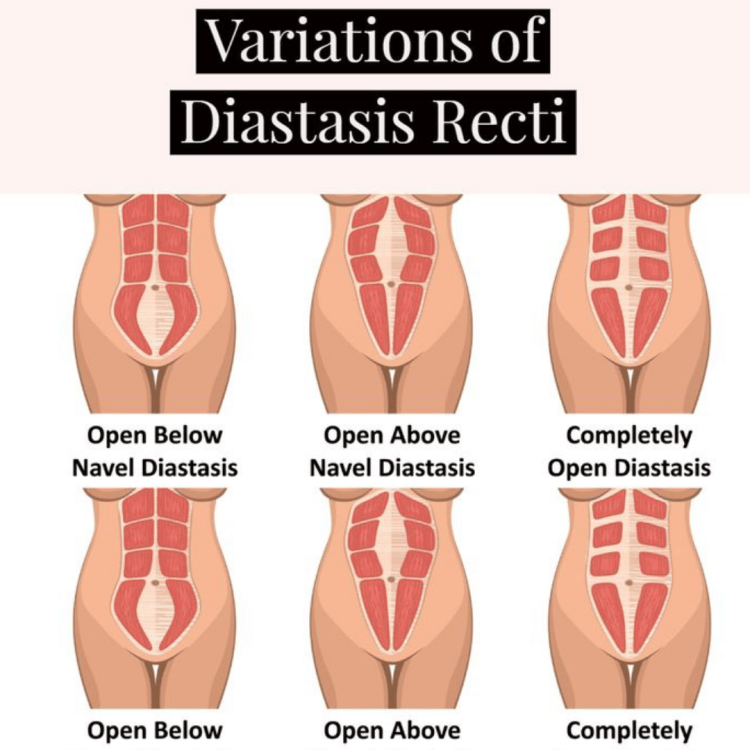
One of the first things I assess in postpartum women is diastasis recti abdominis (DRA).
Diastasis recti is a widening and thinning of the connective tissue along the midline of the abdomen — the linea alba — between the two sides of the rectus abdominis.
It is common after pregnancy, and its presence does not automatically mean that something is “wrong” with a woman’s body. What matters is understanding the degree of separation, the quality and function of the abdominal wall, and how the woman is able to generate and control pressure through her trunk.
Why do we measure it?
Because we should not prescribe blindly. Assessment gives us a baseline.
It allows us to monitor how the abdominal wall responds as strength, coordination and function improve. Inter-rectus distance can be assessed clinically, and research studies have used methods including calipers and ultrasound to measure it.
But I do not believe that one measurement tells the entire story.
Two women can have a similar inter-rectus distance and completely different levels of strength, control, symptoms and physical confidence.
So I look beyond the gap.
I assess the function of the entire abdominal system.
How does she breathe? How does she brace? How does she move? How does she transfer force? Can she lift her child without discomfort? Can she squat, hinge, push, pull and carry? Can she progressively become stronger? The measurement is useful. The woman is more important.
The abdominal wall is not there simply to make the waist look smaller. It is part of the body’s central system for controlling movement and transferring force between the upper and lower body. After pregnancy, some women experience reduced abdominal strength, altered trunk control or difficulty managing pressure through the abdomen. For some, this can coexist with low-back, abdominal or pelvic-girdle discomfort. Research suggests an association between postpartum diastasis and these functional concerns, although the relationship is complex and diastasis itself should not automatically be blamed for pain.
We need to understand why the abdominal wall is struggling and progressively restore its ability to work with the diaphragm, pelvic floor, spine and hips.
And there is another side to this that is often ignored: confidence.
A woman may be physically capable of doing more, but if she feels that her abdomen is weak, unstable, painful or unfamiliar, she may stop trusting her body.
Rebuilding strength can therefore change more than physical capacity. It can change the way a woman stands, moves, carries her child, trains and sees herself.
The scar is part of the body — not something to ignore
A C-section also leaves a scar.
That scar represents healing tissue, and the surrounding abdominal area can feel different for months or longer. Some women experience numbness, sensitivity, tightness or altered sensation around the incision.
This is one reason postpartum rehabilitation should not be reduced to calorie expenditure. The objective is to progressively restore movement, strength and confidence while respecting the healing process.
There is no prize for rushing.
Good rehabilitation is not about doing the most. It is about doing what the body is ready to adapt to — and then progressively asking it to do more.
Nutrition Therapy: Rebuilding From the Inside
Training is only one part of rebuilding. A woman cannot build new tissue without the raw materials required to build it. This is where Holistic Nutritional Therapy becomes an important part of my approach.
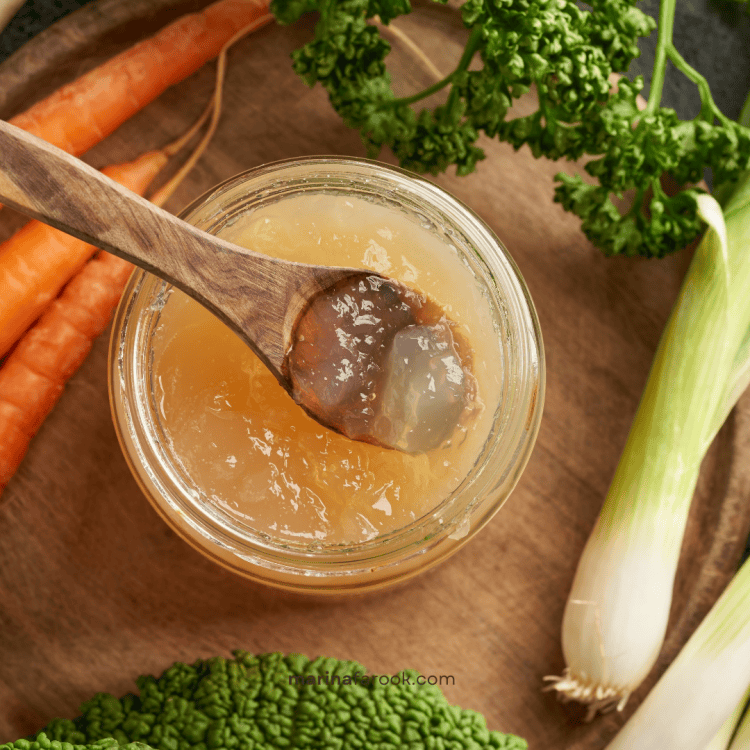
Postpartum nutrition is not simply:
“Eat less so you lose the baby weight.”
The body may simultaneously be recovering from pregnancy, surgery, breastfeeding, sleep deprivation and a significant change in physical demand.
My nutritional approach therefore focuses on nutrient density, adequate protein, essential fats, micronutrients, hydration, digestive health and individualized energy intake. The objective is to provide the nutritional environment necessary for recovery, muscle development, metabolic health and normal physiological function.
Rather than chasing a generic “hormone balancing” diet, I look at the whole picture — symptoms, menstrual history, energy availability, food quality, recovery, body composition and lifestyle — and use nutrition to support the body’s normal physiological processes.
Nutrition does not need to be extreme to be effective.
Hormones Are Part of the Conversation
Pregnancy and the postpartum period involve profound physiological changes.
But hormones should not become a fashionable explanation for every postpartum symptom.
Instead, I look at the interaction between nutrition, sleep, stress, training load, energy availability, menstrual function and recovery.
If a woman is chronically under-eating, sleeping poorly and training excessively, simply adding another supplement or calling it “hormonal imbalance” does not solve the underlying problem.
The body is an interconnected system. We need to understand the system.
That is why nutrition therapy and training are designed together rather than treated as two completely separate services.
Understanding the Infradian Rhythm
Hormonal fluctuations across the menstrual cycle can influence physiology, symptoms, appetite, recovery and, in some women, how they experience training. But this is an area where individualized observation matters. So I don’t tell every woman: “This is your follicular phase, therefore you must train harder.”
Instead, I want to understand her body.
How does she feel? How is her energy? How is her sleep? How is her appetite? How is her recovery?How does she perform? What happens around menstruation? What happens in the second half of her cycle? The menstrual cycle becomes another piece of information that helps us individualize the plan. It is not a rulebook. It is data.
Rebuilding the Whole Body
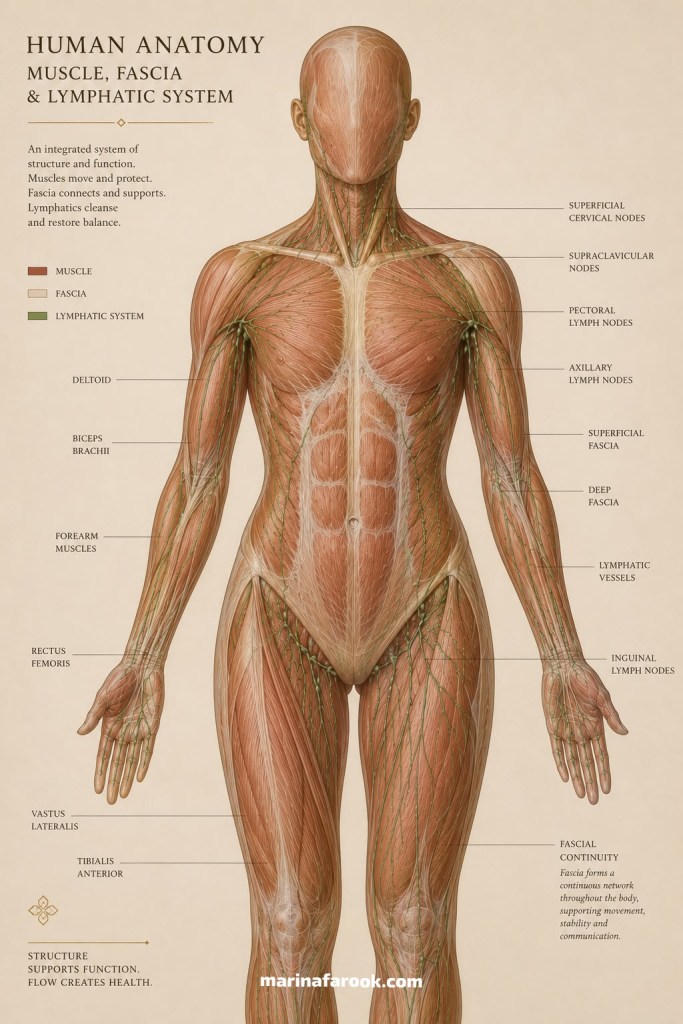
A postpartum woman does not exist as a collection of separate muscles. The abdomen connects to the pelvis. The pelvis connects to the hips. The hips influence the way we load the spine.
The diaphragm and breathing mechanics interact with the abdominal wall and pelvic floor.
The feet influence how force travels through the body.
Nutrition affects recovery. Sleep affects recovery. Stress affects recovery. And all of these factors influence how a woman responds to training.
From Recovery to Strength
Eventually, postpartum rehabilitation should not remain rehabilitation forever. The goal is progression. A woman who begins with basic breathing and core-control work may eventually progress to squats, deadlifts, presses, rows, loaded carries, split squats, hip thrusts and increasingly demanding strength work.
This is where many postpartum programs stop too early.
They teach a woman how to “activate her core,” but never teach her how to use that core while becoming genuinely strong.
I want the woman to graduate from recovery into capability. To lift. To carry. To run, if appropriate. To train. To build muscle. To improve her body composition. To feel physically powerful again.
We are not trying to recreate your old body.
The New Body
Your old body carried a different life.
Your new body has different experiences, different demands and a different story.
So we build from where you are now.
We restore what needs restoring.
We strengthen what has become weak.
We improve what can be improved.
We nourish what needs nourishment.
We progressively challenge the body so that it adapts.
And eventually, we stop thinking about recovery at all.
Because you are no longer recovering.
You are building.
A stronger abdomen.
A stronger back.
Stronger hips and legs.
Greater physical capacity.
Better movement.
Better confidence.
A body you understand.
A body you trust.
This is the philosophy behind my postpartum work.
A body that can carry your child, carry your responsibilities and carry you into the next chapter of your life.
The goal was never to go back.
The goal is to build the new you — stronger, healthier and more capable than before.

